Increase Google Reviews for Restaurants: The Complete Guide
Actionable strategies for restaurant owners to increase Google reviews and rank higher in local search.
Optimize Your Google Business Profile
Nail Google Business Profile Optimization Basics
Your profile is your storefront on search, so treat it like prime real estate. To increase Google reviews for restaurants, start by completing every field with accurate, up-to-date information. Add your exact name, consistent address, and primary phone number that matches your website and menu prints. Choose the most specific primary category and relevant secondary categories to align with diner intent. Keep holiday hours, reservation links, and service options current to boost trust and visibility.
High-quality content signals reliability and earns clicks that lead to reviews. Upload crisp, well-lit photos of your exterior, interior, top dishes, bar, and staff in action. Use keyword-rich but natural descriptions to support Google Business Profile optimization without stuffing. Enable messaging if you can respond quickly, because fast replies convert more searchers into guests. The more complete your profile, the easier it becomes to get more restaurant reviews on Google.
Use Menus, Photos, and Attributes to Encourage Reviews
Make it effortless for hungry searchers to validate their choice before they arrive. Publish a structured menu with prices so diners can scan signature items and dietary options at a glance. Add attributes like "Outdoor seating," "Live music," and "Vegetarian options" to answer common questions in search. Feature user-generated photos and fresh images of specials to inspire visits and, later, encourage diners to leave reviews. Clarity reduces friction and primes guests to share specifics in their feedback.
Visual accuracy also cuts down on mismatched expectations that trigger negative comments. Rotate seasonal photos and remove outdated items to align with what guests will experience today. Pin popular dishes to the top of your photo gallery and include alt-descriptions that reflect how people search. Pair this foundation with Google Business Profile optimization best practices to boost local SEO for restaurants. The right details turn browsers into bookers and reviewers.
Create Review Shortcuts to Increase Google Reviews for Restaurants
Shorten the path from a great meal to a glowing review with a direct link. Use Google's Place ID tool to generate a "Write a review" URL and place it everywhere your brand communicates. Add the link to post-meal emails, SMS follow-ups, receipts, and your website's footer. A clear call-to-action like "Share your experience in 30 seconds" sets expectations and improves completion rates. Frictionless access is a small change that creates a big lift in review volume.
Track performance by using UTM parameters on links in different channels to see what works best. Test versions that reference menus, ambiance, or service to nudge specifics in the feedback. Offer alternatives for guests without Google accounts by listing other platforms, but prioritize Google for local impact. This single tactic helps you get more restaurant reviews on Google while you boost local SEO for restaurants. Small UX wins compound into sustained review growth over time.
On-Premise Systems to Capture Reviews
Train Staff to Ask and Increase Google Reviews for Restaurants
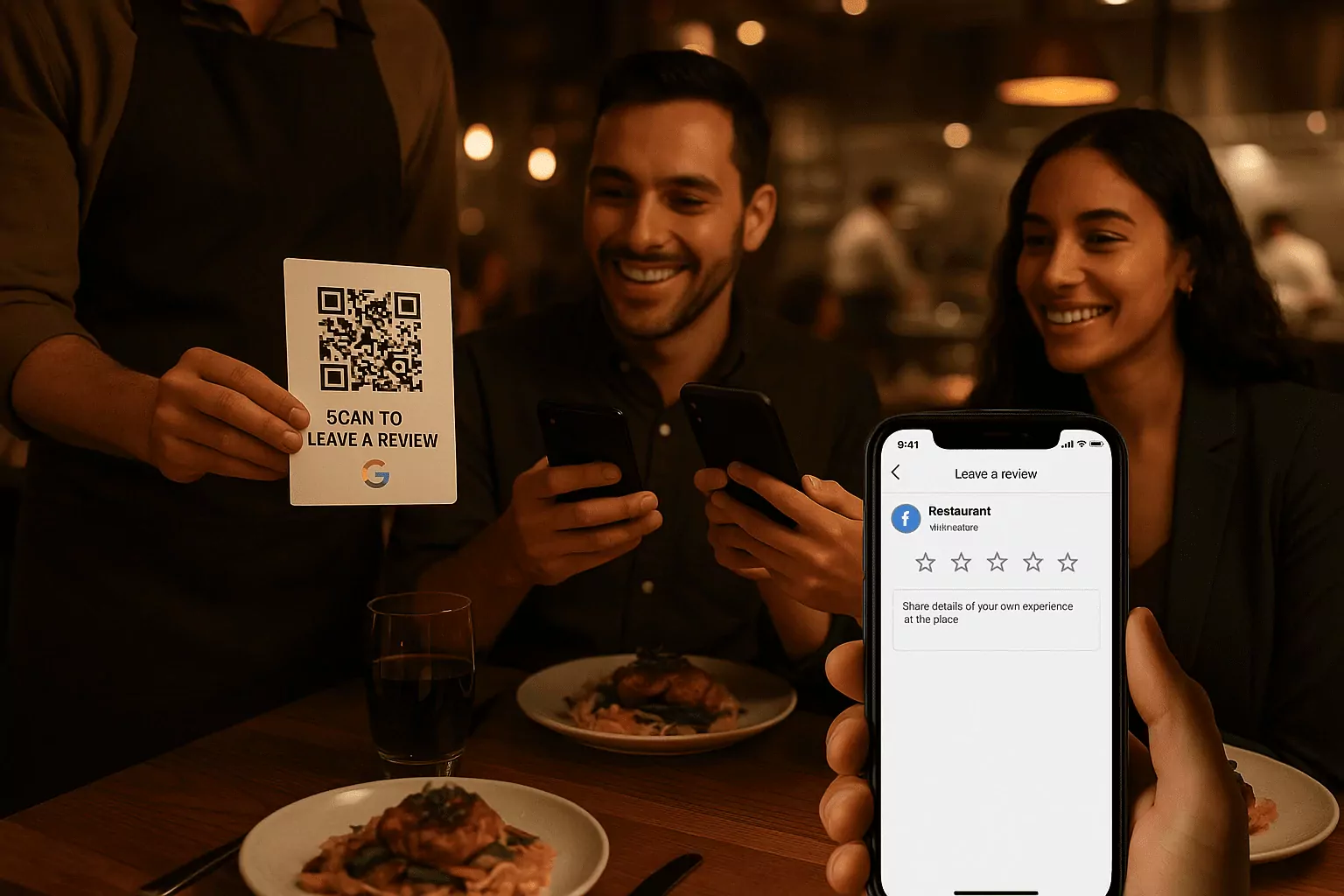
Your team is the most persuasive marketing channel you have. Build a simple flow: confirm satisfaction at the table, thank the guest sincerely, and invite a quick review. When service shines, guests want to reciprocate, and a polite ask provides the nudge they need. Give staff a one-sentence script and a card with a QR code that opens your review link. Recognition programs for staff who spark reviews keep motivation high without incentivizing customer opinions.
Role-play during pre-shift meetings so the ask sounds natural, never pushy. Teach servers to time the invitation after resolving any issues and before presenting the check. Empower them to reference specifics-"If you loved the truffle pasta, a quick Google note helps others choose it." This clarity helps encourage diners to leave reviews that mention details future guests value. Consistency across shifts steadily increases the rate and quality of feedback.
Table Tents, QR Codes, and Receipts That Get Results
Place subtle, branded prompts where attention is highest and hands are free. Table tents near payment time, coasters at the bar, and check presenters can carry a clean QR code and short CTA. Keep the message benefit-focused: "Help local diners find us-share your experience on Google." Rotate designs monthly so regulars don't tune them out and to highlight seasonal features. Make sure every code opens directly to the review form, not just your listing.
Receipts are prime real estate for reminders guests carry home. Print a concise line with your review URL and a scannable code near the total. If you include a promo for a future visit, ensure it applies regardless of review sentiment to avoid incentivizing ratings. Add a small privacy note to reassure guests you never share contact data collected for review prompts. Physical cues compound with staff asks to lift completion rates meaningfully.
WiâFi, Kiosks, and POS Prompts to Get More Restaurant Reviews on Google
Capture moments of idle time to invite feedback while the experience is fresh. Use captive WiâFi portals to display a post-visit review link after guests disconnect, avoiding in-venue ratings that could bias service. Add a small tablet at the exit with a QR code and instructions to review later, not on-site. Configure your POS to print a unique QR code on each check that routes to the Google form. Keep the flow optional and respectful, never gating access behind a review request.
Test placement and wording to see where prompts earn the most scans. A/B test CTAs like "Tell neighbors about your meal" versus "Rate your visit in under a minute." Measure scan-to-review conversion to refine creative and locations over time. These operational touchpoints help encourage diners to leave reviews at scale without burdening staff. The net effect is steady momentum that supports Google Business Profile optimization and visibility.
Post-Visit Follow-Up and Automation
Perfect the Timing and Message to Encourage Diners to Leave Reviews
Follow-up within 12-24 hours while dishes and details are still memorable. Keep the message short, appreciative, and direct, with a single review link and no distractions. Reference the visit date and party name if available to personalize without feeling intrusive. Ask for honest feedback and welcome constructive notes sent privately to your team email. This warm tone earns trust and drives more thoughtful, balanced reviews.
Test sending times by daypart and visit type to find your conversion sweet spot. Brunch and lunch guests often respond earlier in the evening, while dinner guests prefer the next morning. Subject lines that focus on community impact can outperform generic requests by reminding guests they help neighbors choose. Over time, this cadence will get more restaurant reviews on Google while protecting your sender reputation. Consistency beats volume bursts that spike then stall.
Automate with CRM Tools to Boost Local SEO for Restaurants
Use a lightweight CRM or your reservation platform to trigger review requests automatically. Sync guest data from POS, online ordering, and booking tools to avoid duplicates and respect preferences. Create flows that exclude guests who reported issues until your team resolves them, then invite a review later. Segment by first-time versus repeat visitors to vary tone and highlight relevant dishes or experiences. Automation frees staff and scales what already works.
Pair automation with clear guardrails for timing and frequency. Cap review invitations to avoid fatigue, and always include an easy opt-out link. Track open, click, and review completion rates to optimize copy and layout over time. These improvements steadily boost local SEO for restaurants by increasing volume, velocity, and recency signals. With a solid data backbone, every service can translate into public proof.
Segment Offers Without Incentivizing Reviews Illegally
Promotions should reward visits, not specific ratings, to stay compliant with platform policies. Offer a general thank-you perk-like a dessert next visit-regardless of whether a guest leaves a review or the rating they give. Clearly separate the perk from the request so it never feels like a quid pro quo. Invite private feedback channels for issues and public reviews for happy guests to strike the right balance. Transparency protects credibility with diners and with search platforms.
Build segments that recognize milestones without tying benefits to opinions. For example, send a birthday month perk or a "third-visit thank-you" to deepen loyalty. In the same email, include the review link as a secondary, optional action. This approach continues to encourage diners to leave reviews while respecting guidelines. Over the long term, ethical systems outperform risky shortcuts and safeguard hard-won trust.
Respond and Promote Reviews to Build Momentum
Responding to Restaurant Reviews that Win Back and Win Over
Timely, thoughtful replies signal that you listen and care. Thank positive reviewers by name, reference a specific detail they mentioned, and invite them back for something new. For critical reviews, acknowledge the issue, apologize without defensiveness, and state one clear corrective step. Offer to continue the conversation offline with a manager's contact to resolve lingering concerns. Consistent, empathetic responding to restaurant reviews can convert critics into return guests.
Responses also shape how future diners perceive your brand on Google. Keep replies concise, professional, and aligned with your voice across all locations. Track themes-speed of service, noise level, dish consistency-and share them in pre-shifts to drive fixes. As improvements roll out, mention them in responses to show progress and accountability. Over time, strong replies help boost local SEO for restaurants by increasing engagement and trust signals.
Turn Top Reviews into Social Proof Across Channels
Extend the life of great feedback beyond your listing. With permission where required, feature snippets on your website, email footers, and social posts with a link back to Google. Create short reels that pair a five-star quote with behind-the-scenes kitchen moments or plating. Spotlight staff mentioned by name to celebrate hospitality and encourage more detailed mentions in future reviews. The goal is to let satisfied guests endorse you in the places new diners decide.
Make this process repeatable with a simple checklist and shared asset folder. Standardize templates for story posts, in-feed graphics, and table toppers featuring fresh quotes. Rotate which dishes and dayparts you highlight to attract different audiences. As you scale, this flywheel will get more restaurant reviews on Google by reminding fans to share their experiences. Visibility breeds validation, which attracts even more qualified guests.
Track, Analyze, and Improve Review Velocity
What gets measured gets managed, especially with reputation. Monitor volume, average rating, recency, and response time in a monthly dashboard per location. Tag common topics to map patterns back to operations and menus for actionable improvements. Set quarterly goals for review volume and response SLAs so teams have clear targets. Share wins and insights across shifts to keep everyone invested in the outcome.
Use these insights to refine prompts, timing, and training. If weekend visits dominate, increase post-visit emails on Sundays and Mondays. If bar guests review less, test coasters and bartender scripts tailored to that experience. Feed learnings into your Google Business Profile optimization checklist to keep compounding gains. Consistent iteration ensures you steadily increase Google reviews for restaurants month after month.
Frequently Asked Questions
How quickly can a restaurant increase Google reviews?
Most restaurants see movement within two to four weeks once systems are in place. The fastest wins come from staff training, direct review links, and timely follow-ups. Frequency, not one-time bursts, drives sustainable growth and credible signals to Google. Aim for steady weekly additions rather than a single surge, which can look unnatural. When combined with Google Business Profile optimization, momentum compounds as more diners share specifics. Over a quarter, many operators double monthly volume without sacrificing authenticity.
Is it okay to offer incentives for Google reviews?
You should never tie perks to leaving a review or to a specific rating. Platform policies prohibit incentivizing opinions, and violations can remove reviews or hurt visibility. Instead, offer general "thank-you" perks unrelated to feedback, and simply include your review link as optional. Keep asks honest, appreciative, and brief to encourage diners to leave reviews naturally. This approach protects credibility with guests and algorithms alike. Ethical practices win long-term and still boost local SEO for restaurants.
What's the best way to handle a negative review?
Respond quickly with empathy, acknowledge the issue, and avoid canned language. Share one concrete action you're taking and invite the guest to continue the conversation offline. Once resolved, consider a follow-up reply noting improvements so future diners see your accountability. Internally, log the feedback and address root causes with training or menu changes. Consistent, thoughtful responding to restaurant reviews can turn a critic into an advocate. Over time, these interactions reduce churn and build trust with new guests.
How many reviews are enough to boost local SEO for restaurants?
There is no fixed number, but volume, velocity, and recency together move the needle. For competitive markets, a consistent stream-several new reviews each week-often correlates with better rankings. Aim for a balanced mix of detailed comments about dishes, service, and ambiance, not just star counts. Encourage specifics in your asks to guide richer feedback that helps future diners decide. Keeping responses timely further signals quality and engagement to Google. Sustained effort will reliably increase Google reviews for restaurants and strengthen local visibility.