ezrEP.NET Review Acquisition Software: In-Depth 2026 Guide
For agencies and multi-location brands seeking scalable review generation, automation, and compliance-ready reputation management.
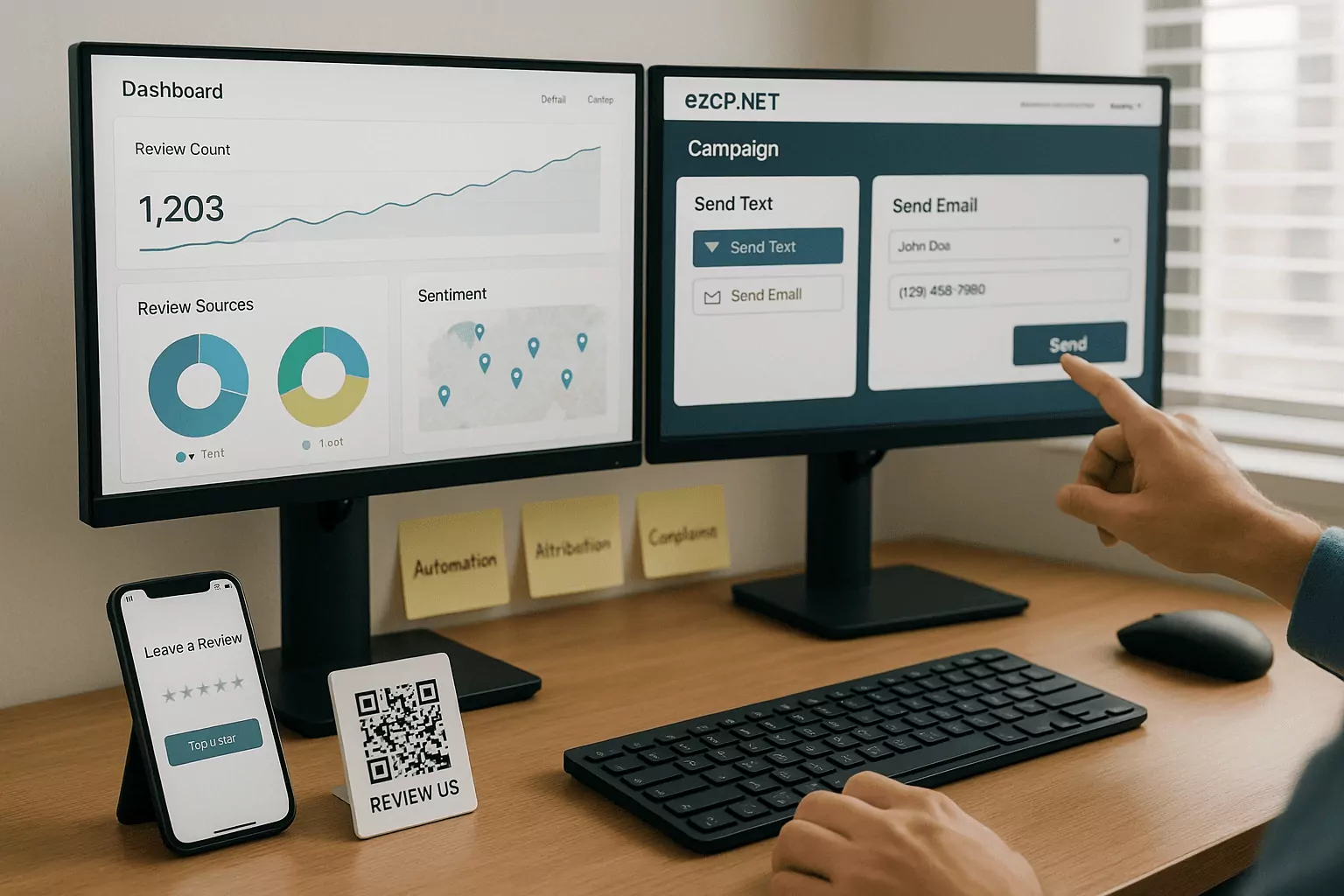
How ezrEP.NET Review Acquisition Software Works End-to-End
Capturing Happy Moments at the Right Time
At its core, ezrEP.NET REVIEW ACQUISITION SOFTWARE focuses on timing, context, and ease for both staff and customers. The capture phase begins right after a positive experience, when intent to share feedback is highest and friction must be lowest. Many teams pair point-of-sale cues with short links, QR codes, or follow-up messages that guide customers into a simple path. In this stage, an online review management platform helps centralize responses and protects data quality for downstream reporting. When executed consistently, customer feedback management becomes a daily habit instead of a campaign that starts and stops.
To support consistency, define a few "review moments" across your journey and assign clear owners. Frontline teams can hand off cards with QR codes, while backend systems trigger automated review requests after closed tickets or completed orders. Keep the ask short, show visible trust signals, and let customers choose their preferred site. This approach reduces drop-off and feeds structured data to your reputation management software for later insights. Over time, you'll build a predictable pipeline of public praise and private feedback.
Requesting Reviews at Scale with Automation
Automation turns sporadic outreach into a reliable engine for growth without burning out your team. Use event-based triggers tied to invoices, appointments, or support resolutions to send automated review requests within a set window. Stagger messages across SMS and email to match customer preferences, and cap the cadence to protect your sender reputation. Strong review acquisition tools also support multilingual templates, quiet hours, and opt-out controls to keep outreach helpful, not spammy. When you automate smartly, your online review management platform can measure results across channels and locations.
Refining templates and sequencing has a big impact on response rates and sentiment. Personalize just enough-use the customer's first name and service context-while keeping the call to action crystal clear. Test different subject lines, send times, and reminder spacing, then let the data decide the winner. Effective review acquisition tools make these tests easy and surface insights without extra spreadsheet work. The result is a virtuous cycle where automated review requests get sharper and more respectful with every iteration.
Routing Feedback to the Right Channels
Not all feedback should go public, and that's where intelligent routing pays off. Build a two-path flow: send promoters to publish on key sites and route detractors to a private form for quick resolution. This protects brand reputation while giving unhappy customers a fast, human response that can turn them into future advocates. A capable online review management platform will segment sentiment automatically and escalate urgent cases. With tight processes, customer feedback management shifts from reactive firefighting to proactive improvement.
As you scale, unify routing rules across locations so customers receive a consistent experience. Map each location to the right listings and ensure profiles are verified, accurate, and complete. Feed private feedback into your reputation management software for trend analysis, tagging, and owner assignments. Close the loop with customers who reported issues and document learnings for the next campaign. Done well, routing boosts review volume and quality while strengthening internal operations.
Core Features and Integrations That Matter
Messaging, QR, and Landing Pages that Convert
Your request message and landing experience determine whether customers complete the journey. Keep copy short, specific, and mobile-first, and lead with the benefit of helping future customers choose confidently. Use branded landing pages that recognize the customer's device and surface the correct app or site with one tap. Pair this with scannable QR codes at entry points like counters, receipts, and packaging for in-person capture. These conversion-first details compound results across an entire network of locations.
Great review acquisition tools make setup fast and improvements repeatable. Centralized template libraries keep messaging on-brand, while field-level permissions allow local teams to tailor details responsibly. Built-in analytics show which pages, QR placements, and prompts drive the most completions. With these signals, your online review management platform becomes a continuous optimization loop. Expect higher completion rates and cleaner data as friction falls away.
Integrations and Data Sync for Accurate Attribution
Accurate attribution turns a pile of reviews into defendable ROI. Connect CRM, POS, booking, and help desk systems so triggers reflect real customer milestones, not guesses. When IDs and events sync, automated review requests align to outcomes your leaders care about-revenue, retention, and resolution speed. Use webhooks or native connectors to keep data fresh and reduce manual uploads that introduce errors. Your reputation management software should enrich each review with location, product, and agent context for better decisions.
Integration depth also affects how quickly you can course-correct. If a location's responses dip, look upstream at the event triggers and staff workflows in your connected apps. Build dashboards that unite request volume, response rates, and average ratings with operational metrics. With this visibility, your online review management platform becomes a shared source of truth across marketing, ops, and customer success. Alignment follows naturally when everyone sees the same, trusted numbers.
Compliance, Permissions, and Brand Safety
Scale demands strong guardrails. Confirm consent, honor opt-outs, and follow regional messaging rules to keep outreach compliant. Enforce template standards and role-based permissions so local teams can act without risking brand voice or legal exposure. Document response policies and escalation pathways to ensure timely, respectful engagement across every listing. These foundations turn reputation programs from risky experiments into reliable, enterprise-ready operations.
A mature program also audits listing health, duplicate pages, and category accuracy. Maintain clear ownership of profiles and secure access with least-privilege principles. Your reputation management software should support audit logs, approval workflows, and exportable records for stakeholders. Taken together, these controls protect trust with customers and platforms alike. They also help your customer feedback management stay resilient as the organization evolves.
Measuring ROI and Aligning Teams
KPIs That Prove Value to Leadership
Set a concise scorecard that leadership can review in minutes. Track request send volume, open rate, click-through, conversion to review, and average rating by location. Pair these with revenue-adjacent outcomes like call volume lift, lead conversion rate, and cost-per-acquisition changes. When your online review management platform rolls these up weekly, trends become obvious and action becomes faster. Leadership cares less about vanity metrics and more about durable, compounding gains.
Translate reputation wins into operational language across departments. Marketing wants share of voice, operations wants fewer escalations, and sales wants higher close rates from search. Connect dots with attribution and pull examples that show how reviews improved outcomes. Your reputation management software should surface these stories alongside the numbers for credibility. When everyone sees how reviews move their metrics, alignment becomes a habit.
Pricing and ROI of ezrEP.NET Review Acquisition Software
Budgeting starts with scale: number of locations, monthly message volume, and integration needs. Model costs against expected review lift, then link those reviews to search visibility, listing conversions, and pipeline outcomes. Include time saved by automation compared to manual follow-ups and spreadsheet reporting. Present scenarios-conservative, expected, and aggressive-so finance can see sensitivity and confidence levels. The clearer the assumptions, the easier it is to approve and expand.
ROI accelerates when teams use the same playbook. Standardize triggers, templates, and response SLAs so incremental locations ramp quickly. Fold insights back into copy and routing rules to keep automated review requests improving month over month. With discipline, ezrEP.NET Review Acquisition Software supports a repeatable engine that beats ad-only strategies on cost and consistency. Over a year, compounding efficiency becomes a strategic advantage.
Where ezrEP.NET Review Acquisition Software Fits in Your Stack
Position the platform alongside your CRM, marketing automation, and support tools-not in a silo. Use CRM records to trigger timely, context-aware asks and return review outcomes to enrich customer profiles. Let marketing automation handle nurture while your online review management platform specializes in the post-experience ask. Feed private feedback to support so product and ops can prioritize fixes. This creates a closed loop where learning flows both ways.
Governance matters as much as wiring. Define ownership for templates, integrations, and reporting so every team knows what "good" looks like. Create a monthly review council to examine performance, experiments, and escalations. With clear roles, your reputation management software becomes a multiplier rather than another dashboard to ignore. The result is a cohesive system that turns feedback into visible growth.
Frequently Asked Questions
How fast can teams see results after implementing ezrEP.NET Review Acquisition Software?
Most teams notice movement within weeks because small wins stack quickly when friction is removed. Early gains often come from cleaning listings, tightening templates, and timing automated review requests better. Volume typically rises first, followed by gradual rating lift as routing and responses improve. Expect sharper insights once integrations sync events and outcomes across systems. With disciplined execution, the curve from setup to impact stays steep and encouraging.
What channels work best for automated review requests: SMS or email?
Both matter, but SMS usually drives faster opens while email supports richer context and links. The strongest programs use a staggered sequence that respects preferences and quiet hours. Start with a short SMS ask and follow with an email that includes branded elements and a direct path. Test timing, tone, and reminders to find the ideal cadence for your audience. With good data, your online review management platform will show a clear channel mix by segment.
How should negative feedback be handled without hurting public ratings?
Design a two-path flow that directs detractors to private forms while inviting promoters to public sites. Respond quickly with empathy, ownership, and a next step so customers feel heard. Log cases in your reputation management software and assign owners with clear SLAs. Share themes with product and operations so issues get fixed at the root. Over time, this approach reduces escalations and turns skeptics into advocates.