ezrEP.NET REVIEW ACQUISITION SOFTWARE: Features, Pricing, ROI
Practical guidance for marketers and operators to turn reviews into revenue with ezrEP.NET REVIEW ACQUISITION SOFTWARE.
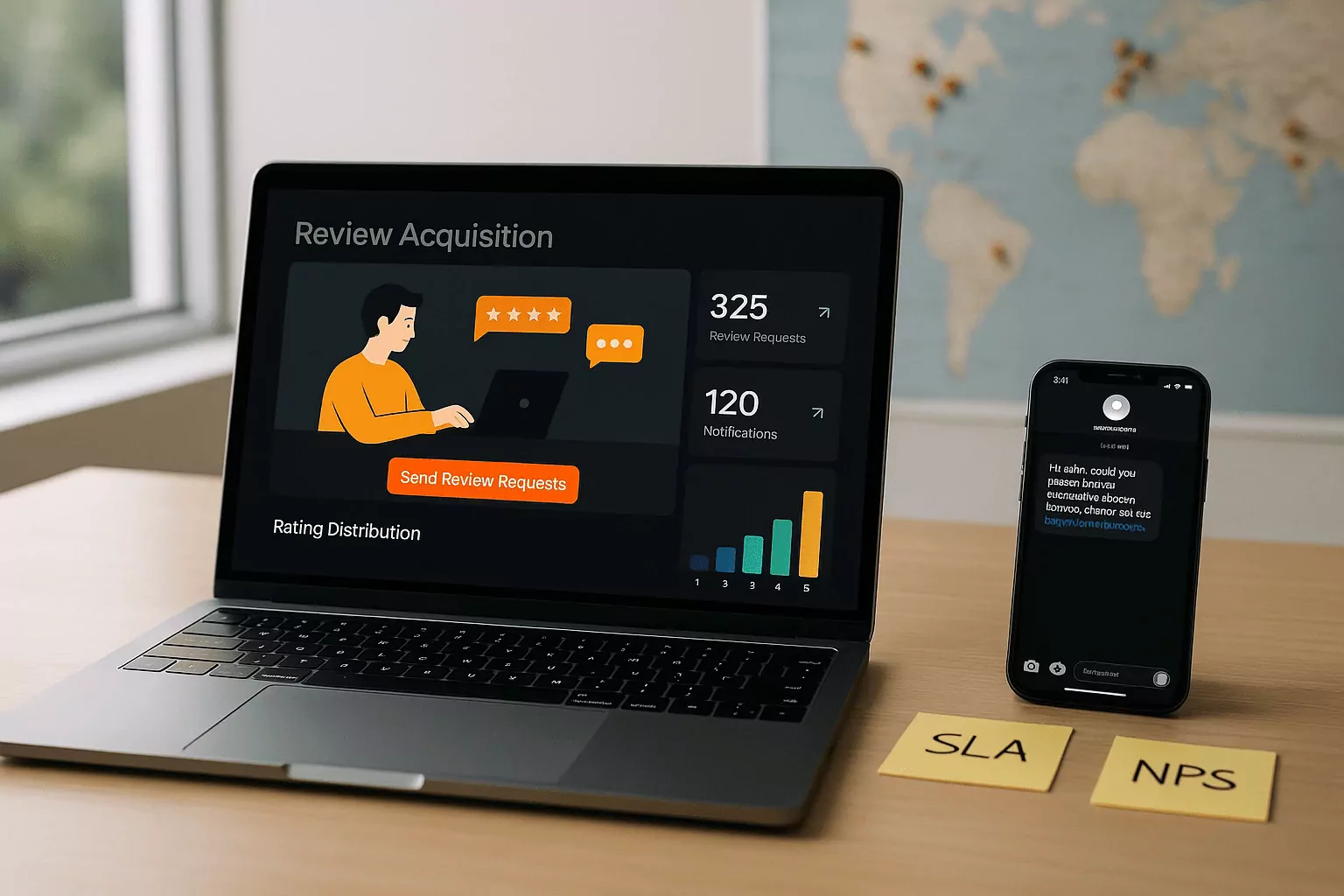
What ezrEP.NET REVIEW ACQUISITION SOFTWARE Does for Your Reputation
Why ezrEP.NET REVIEW ACQUISITION SOFTWARE replaces manual outreach
ezrEP.NET REVIEW ACQUISITION SOFTWARE streamlines the hardest parts of collecting, routing, and publishing ratings at scale. Manual follow-ups miss windows of customer enthusiasm and create inconsistent results across locations and teams. With review request automation, messages trigger at the right moment and through the right channel, lifting response rates without extra headcount. The platform functions as an online review management hub, centralizing profiles and responses so brand voice stays aligned. For leadership, this becomes a repeatable engine rather than a side project that competes with daily operations.
Behind the scenes, automation maps to milestones such as completed appointments, closed tickets, or fulfilled orders. That mapping transforms outreach into a predictable workflow that a reputation management platform can monitor and improve. Templates adapt tone by segment, language, and star history to protect credibility while nudging action. Because it also behaves like customer feedback software, negative signals route to service teams before they turn into public detractors. The result is steadier star growth, fewer surprises, and a cleaner feedback loop between frontline teams and marketing.
Unified pipeline from request to response
Great systems reduce friction from the first ask to the published review, and this is where online review management pays off. Contacts enter the pipeline via synced CRM or POS events, then receive timed SMS or email nudges. If a customer starts but abandons the process, gentle reminders reactivate interest without spamming. Once a review lands, response workflows assign ownership and set SLAs so no post sits unanswered. The same pipeline powers local SEO reviews, ensuring each location's profile stays fresh and trustworthy.
Feedback triage separates public praise from issues that need private attention. As customer feedback software, the platform flags keywords like "refund," "delay," or "billing" and notifies the right role. That structure protects reputation while turning complaints into recoveries that often convert to updated ratings. Team managers track closure rates and response quality, building habits that outperform ad spend on trust metrics. Over time, the process compounds into a defensible moat across directories and maps results.
Data visibility that leadership can act on
Executives need clarity on what moves revenue, not vanity dashboards. The system surfaces leading indicators such as request send rates, open rates, click-through, and completion by channel. As a reputation management platform, it correlates star distribution with search impressions, direction requests, and goal conversions. Cohort views show which locations or teams excel, and where training or staffing can unlock more wins. These insights guide budgets toward channels that amplify local SEO reviews and word-of-mouth effects.
Finance teams appreciate attribution that ties review lifts to traffic and conversion deltas. Online review management data pairs with web analytics to model lift in calls, bookings, and store visits. When targets slip, automated alerts catch declines before rankings erode in competitive markets. Leaders can then adjust request cadence, copy, or audience segments to recover momentum quickly. This visibility turns reputation into an operating metric rather than a quarterly surprise.
Key Features That Move Ratings and Revenue
Review request automation that respects timing and tone
Review request automation works because it aligns with real customer moments, not marketer guesses. Triggers fire after completed services, delivered products, or resolved tickets, hitting the window when gratitude is highest. Message variants test subject lines, send times, and channel mix to lift completion without fatigue. Smart throttling prevents over-contacting frequent buyers while ensuring new customers get welcomed and invited to share. The outcome is a steady stream of balanced feedback that platforms reward with better visibility.
Localization personalizes names, store details, and appointment data so requests feel relevant and human. Dynamic links route customers to the right profile, protecting data integrity across franchises and regions. As online review management improves, follow-ups taper to maintain list health and sender reputation. The framework also supports service recovery branches that invite private feedback before a rating is posted. That balance keeps response quality high while preserving momentum in competitive verticals.
Online review management and response at scale
Centralized inboxing consolidates Google, Facebook, and industry directories into one queue for faster action. Response templates help agents meet tone guidelines while leaving room for personalization and empathy. Escalation rules route sensitive posts to managers or compliance for approval before publishing. SLA timers keep pace with consumer expectations so positive momentum compounds over time. This is online review management designed for multi-location speed and brand safety.
Bulk actions let teams acknowledge similar praise efficiently while reserving expert time for complex cases. Saved searches filter by star level, topic, or location to surface the next best actions. As a reputation management platform, role-based permissions protect access without slowing daily work. Audit trails document who responded and when, satisfying regulated industries and enterprise procurement. Combined, these features eliminate chaos and free teams to focus on experiences that earn better ratings.
Customer feedback software meets reputation management platform analytics
Sentiment analysis mines themes across comments to expose friction points by product, region, or shift. As customer feedback software, the system turns unstructured text into trends that operators can fix quickly. Dashboards track NPS, CSAT, and star distributions alongside conversion metrics from search and maps. Alerts flag sudden dips for rapid triage before rankings and revenue feel the impact. These analytics inform roadmap decisions that matter more than chasing one-off ratings.
At the executive layer, the reputation management platform links review velocity with local search growth. Multi-location heatmaps reveal which markets gain share after process changes or staffing investments. Integration with analytics clarifies which keywords and pages benefit most from fresh, high-quality signals. Teams then prioritize content and profile updates that amplify local SEO reviews in target cities. The feedback loop drives a smarter, faster operation that compounds returns over time.
Pricing, ROI, and Fit
Transparent pricing and total cost of ownership
Budgets hinge on seats, locations, and messaging volume, so plans should scale cleanly as you grow. Expect tiers that bundle core automation, integrations, and analytics, with add-ons for advanced compliance or APIs. Total cost of ownership includes onboarding, profile cleanup, and potential carrier fees for SMS traffic. Map those inputs to projected review volume, response gains, and search lift to justify spend. A disciplined model keeps costs predictable while protecting service quality during peak seasons.
Enterprise buyers should confirm SSO, role permissions, and audit readiness before rollout. For franchises, check how billing splits across corporate and local owners without slowing adoption. If migrating, plan redirects and profile merges to safeguard existing authority and rankings. Negotiate success milestones that tie payments to activation, throughput, and star distribution goals. Clear guardrails keep procurement, finance, and operations aligned from kick-off to scale.
ROI you can forecast with ezrEP.NET REVIEW ACQUISITION SOFTWARE
Model ROI by connecting request send rates to expected completion and publish rates per channel. Small lifts in completion often create outsized gains in map visibility, calls, and bookings. Tie those increases to location-level conversion values to project revenue impact credibly. Because online review management reinforces trust, it also lowers paid media CAC in competitive categories. With ezrEP.NET REVIEW ACQUISITION SOFTWARE, the compounding effect becomes a measurable growth lever.
Baseline current rating, recency, and volume against local competitors before you start. Set quarterly targets for review velocity and response SLAs, then monitor deltas in discovery metrics. Where local SEO reviews expand fastest, allocate budget for additional outreach and profile work. Over a few cycles, the forecast and actuals converge, making investment decisions straightforward. Consistency, not bursts, is what unlocks durable ROI across regions.
Who gets the most value
Agencies managing many locations benefit from unified dashboards, bulk actions, and white-label reporting. Franchises gain control over brand standards while empowering local teams to move quickly. Healthcare and home services rely on trust cues, making local SEO reviews especially valuable for conversion. Enterprise retail and hospitality win by turning high transaction volumes into fresh, diversified proof. Any team that treats reputation as an operating system sees compounding returns over time.
When choosing a reputation management platform, prioritize integrations with your CRM, POS, and messaging providers. Verify that customer feedback software features can segment by service line and surface actionable patterns. Emphasize review request automation quality, not just quantity, to protect authenticity and compliance. Build playbooks for high-impact moments like openings, seasonality, and incident response. With steady execution, online review management turns brand promises into searchable, public proof.
Implementation Playbook
90-day rollout checklist and success metrics
Start with a pilot cohort of locations to validate deliverability, templates, and routing rules. Configure triggers tied to real operational milestones so review request automation fires accurately. Build response libraries for common scenarios, leaving room for personalization and empathy. Train frontline teams on SLAs, escalation paths, and tone guardrails so online review management stays consistent. Define weekly scorecards that track sent, opened, clicked, completed, and responded metrics.
By week six, expand to additional locations while monitoring throughput and quality. Introduce A/B tests on timing, copy, and channel mix to nudge higher completion. Publish internal leaderboards to encourage healthy competition and share winning examples. Align KPIs with leadership, such as star average, median time to respond, and location coverage. Lock in learnings as standard operating procedures before entering the next growth wave.
Compliance, permissions, and data hygiene
Maintain opt-in and opt-out rigor for every outreach channel to protect sender reputation and trust. Avoid gating or incentivizing public reviews to comply with platform rules and regulations. Role-based permissions ensure regional teams can work quickly without risking profile integrity. Regular audits catch duplicate listings, outdated info, and broken links that undermine credibility. A clean foundation lets your reputation management platform move fast without costly setbacks.
Protect PII by limiting who can export data and by logging access trails for accountability. Align legal and compliance early so response templates and workflows meet industry standards. As customer feedback software, the system should support redaction and retention policies. Document how issues escalate to private channels before posting public replies on sensitive topics. These habits keep progress sustainable as volumes grow.
Boosting visibility with local SEO reviews and profiles
Fresh, high-quality local SEO reviews signal relevance and recency to maps and directory algorithms. Complete profiles with accurate categories, hours, services, and media to capture more discovery queries. Pair online review management with photo updates and Q&A maintenance to reinforce authority. Encourage staff to note specifics in responses, adding context that helps algorithms and shoppers alike. Consistency across locations prevents authority from fragmenting into duplicate or weak listings.
Track which queries surge after rating lifts and create content that answers those intents. Use UTM parameters on profile links to measure traffic and conversion by location. Promote standout reviews in on-site widgets and email to extend social proof beyond directories. As momentum builds, highlight markets with rapid gains to inspire lagging regions. Done well, local SEO reviews become the backbone of reliable, low-cost demand.
Frequently Asked Questions
How does ezrEP.NET REVIEW ACQUISITION SOFTWARE differ from generic review tools?
It treats reputation as an operating system, not a side utility. Beyond sending requests, it orchestrates triggers, routing, and SLAs across teams and locations. As an online review management hub, it consolidates profiles, permissions, and analytics in one place. The platform also acts as customer feedback software, converting text into insights that operators can fix. Leadership sees the full pipeline from outreach to revenue signals, not just star counts. This combination outperforms point tools in speed, quality, and scale.
Can it integrate with our CRM and POS for automated triggers?
Yes, integrations connect key lifecycle events like appointments, purchases, and ticket closures to review request automation. Data sync ensures the right person receives the right ask at the right time. As a reputation management platform, it maps roles and locations so routing and approvals stay clean. Logged events power reporting that links operational wins to ratings and traffic lifts. This reduces manual work while improving accuracy and throughput. Teams get more reviews with fewer touches and fewer errors.
How fast will we see rating and traffic improvements?
Most teams notice volume gains within weeks as request cadences go live and responses speed up. Star averages tend to stabilize higher as more balanced feedback offsets outliers. Local SEO reviews begin influencing visibility as recency and velocity improve across profiles. Online review management habits then compress response times, which further strengthens trust signals. Traffic, calls, and bookings typically follow as profiles climb into top map packs. Results compound with consistency and operational follow-through.