Best software to improve Google reviews: Boost Ratings Fast
Practical guide for local businesses to choose software to improve Google reviews, streamline feedback, and grow search visibility.
What Effective Software to Improve Google Reviews Looks Like
How software to improve Google reviews drives more 5-star ratings
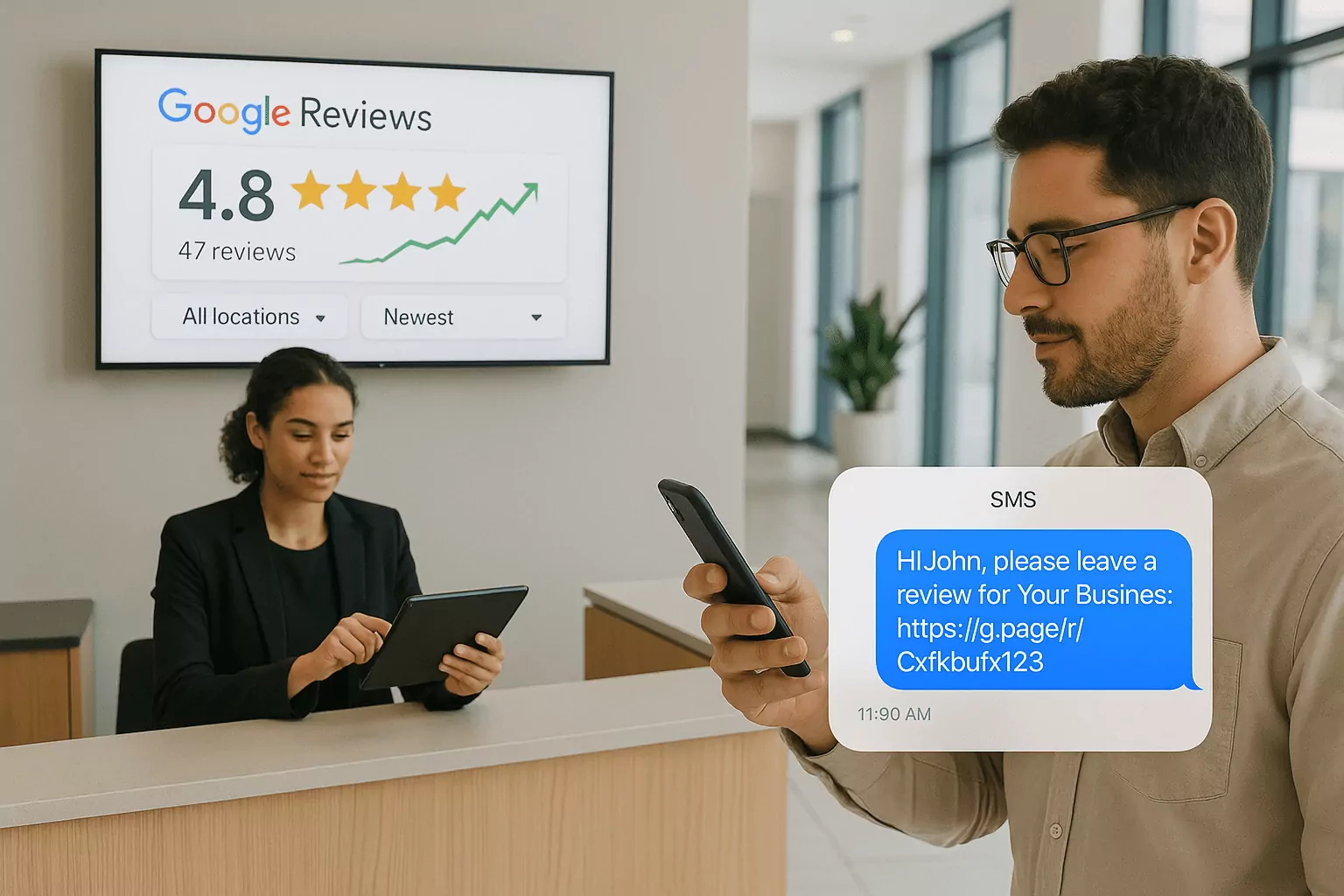
Software to improve Google reviews works by removing friction at every step, from asking at the right moment to guiding customers to the correct page. The best Google review management software centralizes outreach so teams can trigger requests automatically after visits or purchases. Clear, mobile-first requests make leaving feedback effortless, which consistently lifts response rates and quality. Smart routing keeps happy customers flowing to public profiles while unhappy customers get service recovery paths. These capabilities compound results, improving local rankings and conversion from search. When executed well, even small businesses see steady gains within weeks.
Review generation tools also help uphold platform policies while still driving measurable growth. Pre-built templates align with Google's guidelines and avoid gating or incentives that can cause issues. Scheduling and throttling features pace requests so your profile growth looks natural and sustainable. Because the process is centralized, managers can audit messaging, track performance, and standardize best practices across teams. Over time, this creates a reliable engine that turns everyday interactions into persuasive, fresh social proof. Consistent volume and recency signal trust to both algorithms and nearby customers.
Automation and timing that maximize response rates
Well-timed, automated requests are the backbone of effective review generation tools. Triggers tied to completed appointments, deliveries, or closed tickets ensure outreach lands when satisfaction is highest. Staggered reminders across SMS and email capture attention without feeling pushy, and branded templates set the right tone. Mobile-friendly flows and one-tap deep links reduce taps and confusion that cause drop-off. By measuring send times, channels, and copy, teams can continuously refine campaigns. The outcome is a predictable stream of Google My Business reviews that keeps your profile fresh.
Strong orchestration also prevents overlap with other customer communications. Calendar-aware sends avoid cluttering inboxes on busy days, and channel suppression rules respect opt-outs. Service-specific workflows let you match requests to the experience a customer had, which increases relevance and response. A/B testing helps isolate which calls to action and lengths work best for each audience segment. As results come in, dashboards surface the winning combinations without manual guesswork. This blend of automation and insight elevates both review volume and quality.
Safeguards that strengthen online reputation management
Modern platforms pair growth with protections that support responsible online reputation management. Sentiment filters and internal feedback forms route critical comments to your team before they appear publicly. This enables quick recovery, coaching, and make-goods that can transform detractors into future advocates. Escalation rules notify managers when high-risk themes emerge, helping you address root causes. Compliance tools keep programs aligned with Google policies and privacy requirements across regions. Together, these safeguards ensure growth never compromises trust or compliance.
Customer feedback software should also help close the loop across departments. Integrations send themes to service, operations, and product teams so they can fix what matters most. Tagged feedback reveals patterns by location, staff member, or service line, turning anecdotes into action. Training libraries capture winning responses and playbooks for recurring scenarios. Over time, this discipline not only raises review scores but also reduces the issues that trigger negative feedback. Healthier operations naturally produce better public sentiment and steadier search visibility.
Essential Features and Integrations to Prioritize
Request campaigns, templates, and A/B testing
Look for Google review management software with campaign builders that non-technical users can run confidently. Reusable templates keep voice consistent while allowing personalization by service type or location. A/B testing for subject lines, SMS copy, and send timing helps pinpoint what actually moves customers to act. Throttling and daily send caps keep volume steady so growth appears organic to algorithms. Multi-language support expands reach in diverse markets without sacrificing clarity or compliance. Together, these tools convert routine interactions into reliable review outcomes.
Detailed analytics should tie each request to downstream actions and ratings given. Funnel views expose where potential reviewers drop, enabling targeted improvements to copy or timing. Channel performance reports clarify when SMS, email, or QR is the best choice. Cohort analyses compare new versus repeat customers to refine follow-up cadence. When decisions are data-driven, improvements compound month after month. The result is a feedback engine that keeps pace with your customer volume.
Deep integrations with POS, CRM, and calendars
Great software to improve Google reviews fits into existing systems so teams do not add manual work. Native connections to POS, CRM, ticketing, and scheduling platforms let you trigger review requests from real events. Field mapping ensures names, services, and locations personalize the ask without errors. Calendar-aware logic avoids sending requests before appointments are complete or issues are resolved. Webhooks and APIs fill gaps when you need custom triggers or data flows. By meeting teams where they work, adoption rises and outcomes scale.
Consider how integrations protect data quality and privacy from day one. Permissioned access, role-based controls, and audit logs keep customer information safe. Data validation and deduplication prevent duplicate messages that frustrate recipients. Opt-out sync ensures compliance across systems and channels. When integrations are reliable, managers can focus on optimization instead of troubleshooting. This is where customer feedback software delivers compounding value beyond basic outreach.
Analytics that link Google My Business reviews to revenue
Reporting should go beyond counts to show impact on visibility and sales. Track growth in review volume, average rating, and recency alongside local rankings for priority keywords. Correlate spikes in high-intent traffic with campaign windows to see what drives conversions. Location-level dashboards reveal where training or process fixes will yield fast gains. Exportable reports help leaders share progress and secure continued investment. When results are visible, teams stay aligned on the program's value.
Advanced platforms enrich analytics with sentiment and category insights. Topic tagging surfaces common praise and pain points that inform operations and marketing. Comparing themes across locations uncovers best practices worth standardizing. Cost-per-review metrics clarify which review generation tools deliver the best ROI. Over time, these insights guide where to invest next, from staffing to service design. Clear connections between reviews and revenue keep momentum strong.
Evaluation Checklist for Teams and Budgets
Choosing software to improve Google reviews for small businesses
Small teams need simplicity, automation, and clear pricing to succeed quickly. Prioritize setups that launch in days with pre-built templates and minimal IT support. Make sure SMS and email credits are predictable so there are no billing surprises. Look for self-serve guidance, in-app tips, and responsive support when questions arise. Localized features such as hours-based sending ensure outreach stays context aware. With these basics in place, you can grow Google My Business reviews without adding headcount.
Ask vendors to show how one person can manage the entire process in under an hour a week. Confirm there is a mobile app for quick responses on the go and manager approvals when needed. Check that online reputation management safeguards are available even on entry plans. Insist on transparent cancellation terms and data export options to avoid lock-in. When platforms respect limited resources, adoption and outcomes rise together. This is how smaller operators win against bigger competitors.
Scaling for multi-location brands and franchises
Enterprises need granular controls, hierarchy support, and strong governance. Seek location groups, role-based access, and approval workflows that reflect your org chart. Centralized templates keep brand voice consistent while allowing local personalization. Territory-based routing and throttling spread requests evenly across stores. Audit trails, SSO, and data residency options satisfy compliance requirements. These capabilities let corporate guide strategy while local teams execute confidently.
Central dashboards should compare performance across markets and flag outliers. Playbooks can codify winning cadences so new locations ramp faster. Integration depth matters more at scale, so validate POS and CRM connections thoroughly. Bulk actions for users, locations, and templates save time during expansions or rebrands. With the right foundation, review generation tools become a durable growth lever across hundreds of storefronts. Consistency in execution translates directly to search visibility and revenue.
Agency-ready workflows, white labeling, and client reporting
Agencies require flexible accounts, clear attribution, and client-friendly reporting. Look for white-label portals, custom domains, and email/SMS branding to present a cohesive experience. Multi-tenant architecture keeps data separated while enabling centralized oversight. Automated client reports highlight wins, insights, and next steps without manual assembly. Lead-sharing and co-management options let in-house teams collaborate smoothly with your staff. These features turn services into repeatable, profitable packages.
Revenue-minded agencies also need pricing that scales with client count and volume. Verify margin-friendly tiers, seat flexibility, and shared message pools across accounts. API access enables custom dashboards and deeper integration with existing agency stacks. Proven online reputation management features reduce risk if a client faces a surge in complaints. With strong tooling, agencies can deliver more value per hour and retain clients longer. Reliable software to improve Google reviews becomes a cornerstone of local SEO retainers.
Frequently Asked Questions
How fast can software to improve Google reviews impact rankings?
Most businesses see early movement in a few weeks as fresh reviews accumulate and engagement rises. Search gains depend on volume, recency, and quality relative to nearby competitors. Consistency is crucial, so automation and steady cadence matter more than one-time pushes. As review profiles strengthen, click-through rates improve, sending further positive signals. Results compound when paired with complete profiles, strong photos, and accurate listings. Expect measurable traction in 30 to 90 days, with lasting gains from ongoing programs.
Is it okay to ask customers for Google reviews?
Yes, asking is allowed when you follow Google's policies and avoid incentives or gating. The key is to request honestly, give clear instructions, and never pressure or filter by sentiment. Good platforms include compliant templates and flows that request feedback from all customers. Private feedback paths help address issues without suppressing honest public reviews. Training staff on neutral, polite asks ensures consistency and comfort. Transparency builds trust with customers and protects your profile long term.
What metrics prove your Google review management software is working?
Core indicators include review volume, average rating, and recency trends across locations. Response rates to SMS and email requests reveal whether campaigns resonate. Conversion by channel shows where to invest budget for the best yield. Topic and sentiment insights demonstrate operational improvements from customer feedback software. Local search metrics such as views, calls, and direction requests connect reviews to demand. Tying these outcomes to revenue or bookings provides the clearest proof of ROI.