Best Google Review Management Services Near Me
Practical guide for local owners choosing Google review management services near me to raise ratings, revenue, and trust.
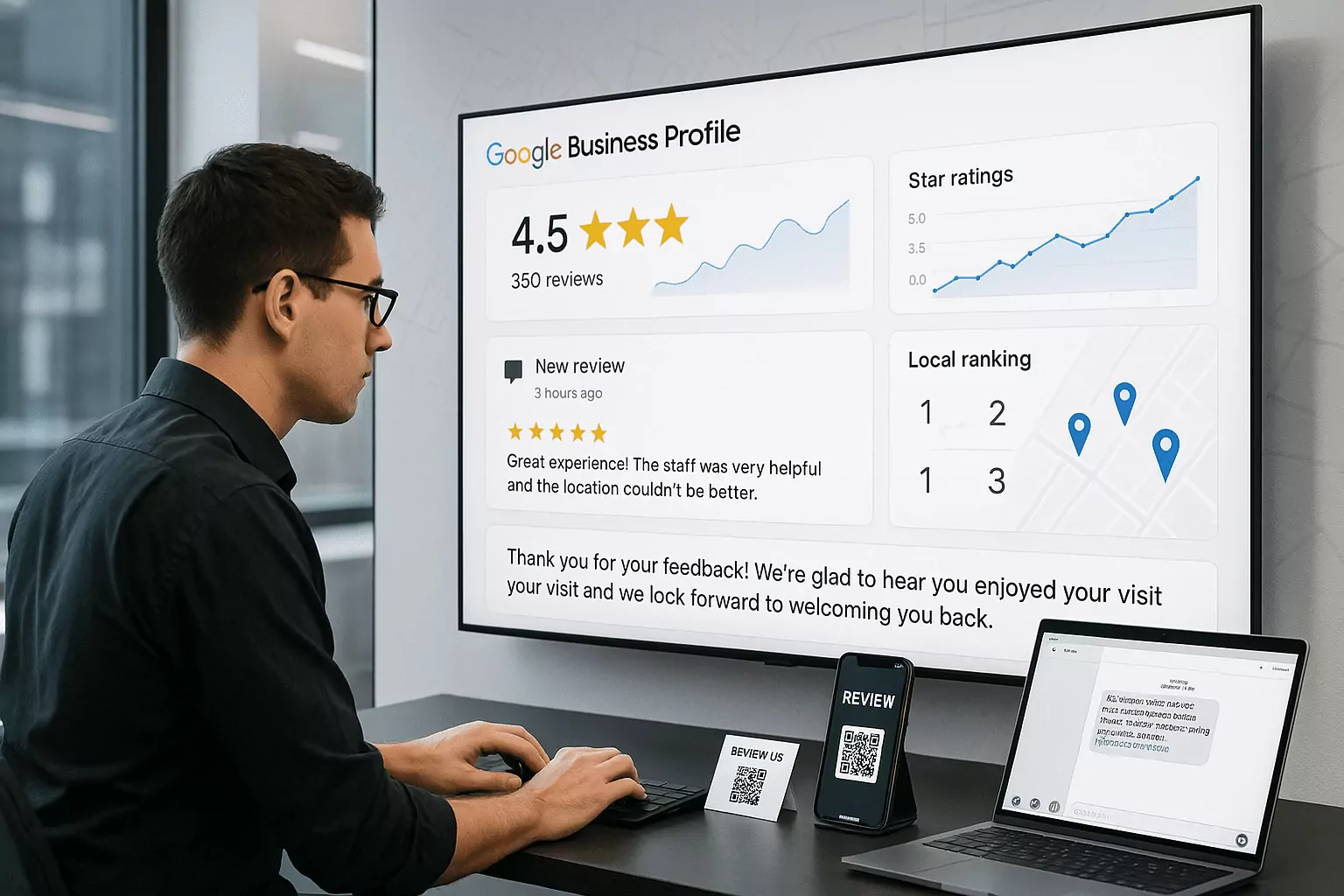
How Google Reviews Drive Local Revenue
Why Ratings and Recency Matter for Local SEO
When you search for Google review management services near me, you are really looking for an engine that turns customer sentiment into measurable growth. Google rewards businesses that earn steady, recent reviews because fresh signals suggest active operations and real-world relevance. Higher average ratings influence click-through rates, which tells the algorithm your listing deserves more visibility. Recency works like momentum, helping you outrank competitors that gained stars long ago but have gone quiet. Combined with online reputation management practices, consistent review activity lifts both visibility and conversion.
Local SEO services hinge on behavioral signals, and reviews shape many of them at once. Strong ratings increase taps on your call button and requests for directions, which Google interprets as quality. Recency reduces doubt for new shoppers who want proof you are still delivering. Volume matters too, but only when growth looks natural and policy-compliant. The right partner focuses on earning authentic reviews tied to recent visits, not shortcuts that risk penalties.
Revenue Impact of Proactive Response
Responding to reviews quickly turns a public rating into a public relationship. A professional team acknowledges praise, adds helpful context, and invites next steps, which nudges happy customers to return. Thoughtful replies to negative posts can rescue at-risk revenue by clarifying issues and offering solutions. This is where customer feedback management blends with online reputation management to show prospective buyers you are accountable. The compounding effect is simple: credible responses build trust, and trust drives bookings and sales.
Speed and tone matter as much as the content of your reply. Aim for responses within 24-48 hours, with empathy first and details second. Avoid canned language that sounds robotic, and never reveal personal or confidential information. Use review monitoring tools to catch new posts fast and assign owners for follow-up. Over time, your response history becomes a competitive moat, making price less of a deciding factor for shoppers.
Signals Google Reads Beyond the Stars
Google's algorithm evaluates far more than a 4.8 average. It looks at velocity, diversity of reviewers, and the language customers use to describe your services. Mentions of product categories, neighborhoods, and staff names help the system associate your brand with relevant searches. Google Business Profile reviews that reference specific experiences often correlate with higher conversions. A capable provider will structure prompts and timing to encourage detail without scripting outcomes.
Contextual cues also live in your response strategy. Referencing solutions, policies, or updates in clear language helps future readers make confident decisions. Consistency across locations prevents one storefront from dragging down chain-wide performance. Pair qualitative insights with local SEO services to align pages, hours, and categories. The goal is harmony: accurate data, steady reviews, and responsible replies reinforcing the same story.
Choosing Google Review Management Services Near Me
Must-Have Features in Google review management services near me
The best Google review management services near me combine automation with human judgment. Look for unified inboxes that pull in Google Business Profile reviews in real time, with alerts routed to the right team. Built-in review monitoring tools should categorize sentiment, flag urgency, and propose reply drafts without sounding generic. Ethical review generation-via post-visit emails, SMS, or QR codes-must follow platform policies. Dashboards should tie reviews to traffic, calls, and revenue so you can see the business case.
Equally important is workflow. You need role-based permissions, approval paths for sensitive replies, and escalation rules for legal or safety issues. Templates are helpful, but your partner must customize voice, tone, and compliance for your industry. Customer feedback management should feed insights back into training and operations, not just sit in a report. When features work together, your team spends less time chasing alerts and more time serving customers.
Local Expertise vs National Providers
Local expertise can win when your market has unique seasonality, regulations, or neighborhood nuances. A nearby agency may understand local slang, competitor tactics, and community forums where sentiment spreads. They can also visit sites to train staff on review asks and signage. On the other hand, national providers often bring stronger review monitoring tools, broader benchmarks, and 24/7 coverage. The right choice depends on your footprint, complexity, and service-level needs.
Evaluate providers on their playbooks, not just their pitch decks. Ask for sample responses tailored to your brand, and request anonymized case studies that map reviews to conversions. See how they integrate with local SEO services to adjust categories, services, and pages. Hybrid models-national tech plus local account management-can offer the best of both worlds. Whichever route you choose, insist on clear KPIs and accountable reporting.
Transparent Pricing and ROI Benchmarks
Pricing should reflect locations, message volume, and the depth of services you need. Avoid long-term lock-ins before you see performance trends and seasonal patterns. Request a forecast that connects review velocity and rating improvements to visibility, clicks, and leads. Honest partners will show likely ranges, not guarantees, and align targets with your market potential. They will also flag any constraints, such as limited customer touchpoints or rigid brand policies.
ROI emerges from a chain of cause and effect: more credible stars and fresher reviews lift rankings, clicks, and calls. Track each step so you know where gains originate and where friction lives. Build quarterly checkpoints into your plan to recalibrate spend and tactics. If the provider cannot show progress in both review metrics and business outcomes, renegotiate scope or explore alternatives. Clear math protects your budget and focuses effort where it counts most.
Executing a Winning Review Strategy
Ethical Review Generation and Customer Feedback Management
Ethical review generation respects platform rules and customer choice. Never incentivize ratings or filter by sentiment; instead, ask every eligible customer in a timely, friendly way. Use branded SMS or email with a single clear call to action that opens your Google review flow. Onsite prompts like countertop cards or receipts with QR codes reinforce the ask. Customer feedback management captures private comments too, helping you fix issues before they become public negatives.
Timing is everything. Trigger requests within hours of service while the experience is fresh, and follow with one gentle reminder. Segment messages by service type or location to make prompts feel personal. Make it easy to reach support when someone had a poor experience, giving them an alternative to posting a negative review. This balanced approach preserves authenticity and grows volume without risking penalties.
Response Playbooks for 1-3 Star Reviews
Low-star reviews demand empathy, speed, and structure. Start by thanking the reviewer for the feedback, then acknowledge the specific issue without defensiveness. Offer a clear next step-contact path, replacement, or rework-and move the conversation offline when sensitive. Avoid boilerplate, but keep responses concise and actionable. A consistent tone across managers and shifts shows professionalism to every future reader.
Internal playbooks prevent guesswork when emotions run high. Provide example responses for common scenarios, plus guidance on when to escalate to legal, safety, or executive teams. Track resolutions and close the loop with the reviewer when possible. Over time, patterns in complaints feed improvements in training, staffing, or inventory. Turn every critical review into a process upgrade that reduces future negatives.
Automations with Google Business Profile Reviews
Thoughtful automation keeps your team responsive without sounding robotic. Use review monitoring tools to classify sentiment and route tasks to the right department, such as billing, service, or store management. Draft replies can be suggested by AI but finalized by humans who add brand voice and specifics. Set SLAs for response times and create alerts for patterns, like multiple mentions of wait times. These systems ensure no review slips through the cracks.
Integrations amplify impact. Connect your POS or booking platform so review requests trigger automatically after completed visits. Sync data with your CRM to identify advocates who might leave richer Google Business Profile reviews. Tie outcomes to dashboards that reveal which campaigns or service lines generate the strongest praise. With automation handling busywork, staff can focus on memorable customer moments that create standout reviews.
Measuring Success and Iterating
KPIs That Predict Calls, Clicks, and Visits
Track more than star averages to see the full picture. Measure new review count, recency, response time, and the share of detailed reviews with service keywords. Monitor listing interactions-calls, direction requests, website clicks-to connect reputation to behavior. Watch local pack rankings for your priority terms and neighborhoods. These indicators reveal whether your strategy is improving discoverability and intent.
Set realistic targets based on current baselines and competitor pace. A steady month-over-month climb in recent reviews signals healthy growth. Faster response times indicate operational discipline. Rising engagement on your profile suggests the market trusts your story. When KPIs move together, conversion lifts tend to follow.
Attributing Leads to Reviews and Local SEO Services
Attribution turns reputation work into defensible ROI. Use UTM parameters on your profile links and track calls from your Google number pools. Compare periods before and after major review pushes to isolate impact. Correlate sentiment shifts with changes in local rankings and map-pack visibility. This bridges your review efforts with broader local SEO services so you can invest where returns are strongest.
Qualitative notes matter too. Tag reviews that mention specific services, staff, or neighborhoods to spot profitable niches. Share wins with frontline teams so they know which behaviors fuel five-star moments. When operations and marketing see the same data, budgets and training align. That alignment compounds results across seasons and product lines.
Quarterly Optimization With Your Provider
Make quarterly business reviews a nonnegotiable. Evaluate progress against KPIs, discuss obstacles, and plan experiments for the next 90 days. Tests might include new request timing, SMS copy, or location-specific response tactics. Review compliance updates to keep strategies policy-safe and penalty-proof. Document decisions so teams know what to execute and how success will be judged.
Great partners bring insights, not just reports. Expect clear recommendations, competitive benchmarks, and a plan that connects reviews to pipeline and revenue. If outcomes stall, revisit assumptions and reallocate budget to the highest-yield levers. Continuous improvement separates average programs from market leaders. Over time, your reputation becomes a durable asset that lowers acquisition costs.
Frequently Asked Questions
How quickly should a business respond to Google reviews?
Respond within 24-48 hours to show customers you are attentive and accountable. Quick replies help convert curious browsers into paying customers by signaling reliability. Fast responses also reduce the chance that a negative review will influence others without your side of the story. Use review monitoring tools to route alerts and track SLAs. When volume spikes, prioritize low-star posts first, then address neutral and positive mentions with tailored appreciation.
What makes a review request policy-compliant?
Compliance means asking every eligible customer without incentives, pressure, or filtering based on sentiment. Keep language neutral and avoid scripting what to say, but make the process effortless with direct links. Send requests soon after service and offer an easy path to private support for issues. Do not gate who can leave a review or promise perks for five stars. Following these rules protects your listing and preserves trust in your brand.
How do I compare Google review management services near me?
Start with capabilities: unified inbox, real-time alerts, analytics, and policy-safe review generation. Ask for sample replies in your voice and industry-specific case studies that tie reviews to leads. Evaluate their integration with local SEO services, including category optimization and content updates. Review contracts for flexibility and clear performance checkpoints. Finally, speak with references who resemble your business in size, locations, and seasonality.
Can reviews really influence local rankings and revenue?
Yes-reviews affect visibility and conversion at multiple stages. Recent, authentic reviews boost click-through rates, which helps your listing climb. Detailed Google Business Profile reviews add keyword-rich context that improves relevance for nearby searches. Thoughtful responses demonstrate reliability, reducing friction for hesitant buyers. Together, these effects translate into more calls, visits, and revenue.